.png)
Hypersomnia Self-Assessment Quiz: Understanding Excessive Daytime Sleepiness
Read More


Oral Appliance Therapy (OAT) is a modern, non-invasive treatment for obstructive sleep apnea (OSA) and snoring. It involves wearing a custom-fitted device, similar to a mouthguard or an orthodontic retainer, while you sleep. The primary goal of an oral appliance is to keep your airway open throughout the night, preventing the collapses that disrupt breathing and sleep.
These devices work by gently repositioning your lower jaw or tongue to create more space in the back of your throat. The most common type connects to your upper and lower teeth to move your lower jaw slightly forward. This simple adjustment is often all that is needed to prevent the airway obstruction that characterizes OSA, leading to quieter, more restorative sleep. For those seeking an effective solution, OAT offers a comfortable and convenient path to relief.
Oral Appliance Therapy is a highly effective treatment, but it’s not the right fit for everyone. The ideal candidates are typically individuals who have specific diagnoses or circumstances that make OAT a preferable and clinically sound choice. This non-invasive, portable, and comfortable solution is especially beneficial for those with mild to moderate sleep apnea or people who have struggled with other forms of therapy.
Obstructive sleep apnea is categorized by its severity, which is measured by the Apnea-Hypopnea Index (AHI). The AHI score indicates the average number of apnea (complete breathing pauses) and hypopnea (partial blockages) events that occur per hour of sleep.
For individuals with mild to moderate OSA, OAT is often recommended as a primary treatment. Its ability to stabilize the airway is highly effective for these severity levels. However, a foundational step for any treatment is getting a confirmed diagnosis through a formal home sleep test. If you experience symptoms like snoring or daytime fatigue, the first step is to determine your AHI and the nature of your sleep-disordered breathing.
While Continuous Positive Airway Pressure (CPAP) is a common treatment, many people find it difficult to use consistently. This CPAP intolerance can stem from issues like mask discomfort, claustrophobia, or noise. For these patients, OAT provides a vital and effective alternative. It offers treatment freedom and empowers patients who feel locked into a therapy that doesn't fit their lifestyle.

Because oral appliance therapy is a medical-grade treatment, determining candidacy involves a thorough evaluation of both your sleep disorder and your oral health. Meeting certain criteria is crucial to ensure the device is both safe and effective for you.
Self-diagnosing based on symptoms like snoring or feeling tired is not enough. A definitive diagnosis is a non-negotiable first step. This diagnostic process confirms the presence of obstructive sleep apnea and rules out other sleep-related breathing disorders, ensuring the correct condition is being treated. It also determines the severity (AHI score). If you're unsure about your symptoms, a good starting point can be to take our Sleep Quiz, which can help you understand if a formal sleep test is the right next step.
Since the oral appliance fits over your teeth and adjusts your jaw, strong oral health is a key requirement. A qualified dentist specializing in dental sleep medicine must perform an evaluation. Key criteria include:
At Frontier Sleep & Wellness, our process is designed to be clear, collaborative, and centered around your health. We guide you through each step to ensure you receive the right diagnosis and the most effective treatment.
Your journey begins with a consultation to discuss symptoms like persistent fatigue or loud snoring. If sleep-disordered breathing is suspected, we will arrange for you to take a medical-grade home sleep test (HST).
Once your HST is complete, a board-certified sleep physician will interpret the results. If you are diagnosed with mild to moderate OSA or are CPAP intolerant, we refer you to a qualified dentist with expertise in dental sleep medicine to confirm your oral health candidacy.
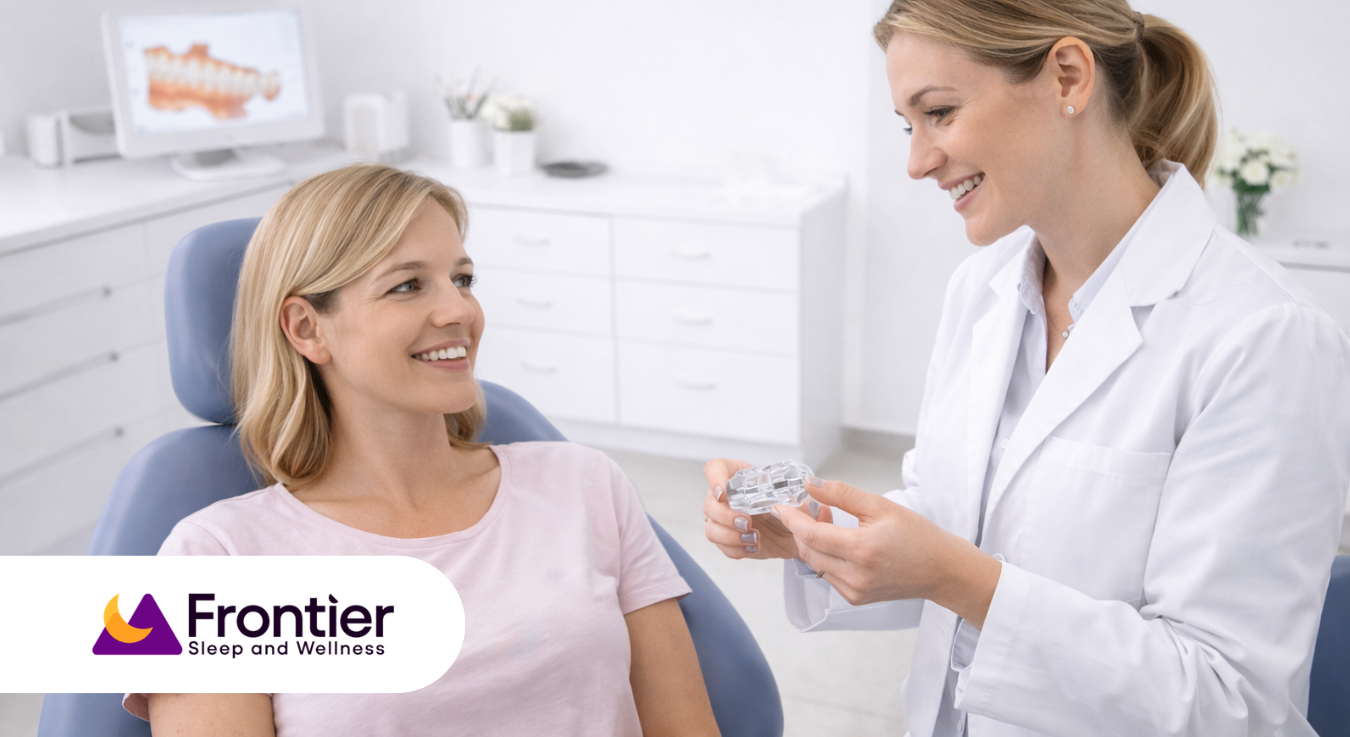
Embed Frontier Sleep & Wellness Image: A patient smiling and talking with a friendly dentist or sleep specialist.
Your oral appliance is custom-fabricated just for you. During your fitting appointment, the dentist will ensure it fits snugly and comfortably. They will also teach you how to insert and remove it. The key to effectiveness is titration—gradually adjusting the device to move the jaw forward over a period of weeks to find the optimal position that keeps your airway open without causing discomfort.
For the right candidate, the benefits of OAT are life-changing. Most patients report a significant reduction in snoring and an increase in daytime energy, concentration, and overall quality of life. The appliance is small, quiet, and easy to travel with, making it a convenient solution for a modern lifestyle. Caring for your device is simple, typically involving daily cleaning with a soft brush and a designated cleaner to keep it hygienic for years.
If you are tired of struggling with a mask or just want to know if there is a better way to sleep, we can give you a clear answer. You don't have to navigate this alone—let’s find a solution that actually fits your life.
Contact us today to schedule your consultation and find out if you are a candidate for Oral Appliance Therapy.
Who is the ideal candidate for oral appliance therapy?
The ideal candidate typically has been diagnosed with mild to moderate obstructive sleep apnea (AHI 5-29) or is unable to tolerate CPAP therapy. They must also have good dental health with enough healthy teeth to support the device.
Do I need a sleep study before I can get an oral appliance?
Yes, a confirmed diagnosis of obstructive sleep apnea from a medical-grade sleep test is required before you can be fitted for an oral appliance. This ensures OAT is the appropriate medical treatment for your condition.
Can I get an oral appliance if I have crowns, bridges, or dental implants?
In many cases, yes. A qualified dentist will evaluate your specific dental work to ensure it is stable and sufficient to anchor the appliance. The health and stability of your teeth are more important than the type of dental work you have.
What disqualifies someone from being a candidate for oral appliance therapy?
Key disqualifiers include having central sleep apnea (not obstructive), suffering from a severe TMJ disorder with active pain, having active and uncontrolled periodontal disease, or lacking a sufficient number of healthy teeth to hold the device in place.