.png)
Hypersomnia Self-Assessment Quiz: Understanding Excessive Daytime Sleepiness
Read More


.png)


Most people wake up once in a while during the night to use the restroom. But what if it’s happening every single night, multiple times a night? This recurring need to wake up and urinate is a medical condition known as nocturia. It's formally defined as waking one or more times per night to void, though it becomes a significant quality-of-life issue when it happens more frequently. While incredibly common, affecting over half of adults over 60, it’s not a normal part of aging that you simply have to accept. This constant disruption fragments your sleep cycle, which can lead to daytime fatigue, mood changes, and difficulty concentrating. Understanding that nocturia is a symptom, not a disease in itself, is the first step toward finding the root cause and getting a restful night's sleep again.
The reasons behind frequent nighttime urination are varied. For many, simple lifestyle habits are the culprit, such as drinking too many fluids, especially caffeine or alcohol, close to bedtime. Certain medications, particularly diuretics (water pills), used to treat high blood pressure, are also well-known contributors.
As people age, natural changes in the body can lead to nocturia. In men, an enlarged prostate, or benign prostatic hyperplasia (BPH), can press on the bladder and create a frequent urge to go. Other underlying health conditions are also common causes, including diabetes, urinary tract infections (UTIs), and heart failure. However, a crucial and often-overlooked cause of nocturia is a sleep disorder: obstructive sleep apnea (OSA). While many people associate sleep apnea with snoring, its effect on the body is far more complex and can directly lead to your bladder waking you up all night.
The connection between sleep apnea and nocturia is a fascinating, yet stressful, biological process. When you have obstructive sleep apnea, your airway repeatedly collapses during sleep, causing you to stop breathing for short periods. Your brain senses the drop in oxygen and spike in carbon dioxide, forcing a brief awakening to resume breathing. This cycle can happen hundreds of times a night.
Each of these events places immense stress on your body, particularly your heart. The struggle to breathe against a closed airway creates intense negative pressure in the chest. Your heart interprets this strain as a sign of fluid overload. In response, the heart's atrial cells release a hormone called Atrial Natriuretic Peptide (ANP). The primary job of ANP is to tell your kidneys to get rid of excess salt and water to lower blood volume and reduce the heart's workload.
This hormonal signal overrides the body's natural nighttime process of concentrating urine. Instead, your kidneys go into overdrive, producing more urine than your bladder is meant to hold during sleep. The result? Your bladder fills up quickly and repeatedly, sending urgent signals that wake you up to pee. This isn't just a coincidence; it's a direct physiological response to the stress of sleep apnea. A proper sleep apnea diagnosis is key to uncovering if this mechanism is the cause of your nightly disruptions.
If your nightly trips to the bathroom are leaving you exhausted, it’s time to consider if sleep apnea is the hidden cause. Nocturia is a significant red flag, but it rarely appears alone. Look for this combination of symptoms that strongly suggests your urination issues are linked to a sleep disorder:
If you experience frequent urination at night alongside any of these other symptoms, it’s a strong indicator that you should investigate different treatment options for sleep apnea.
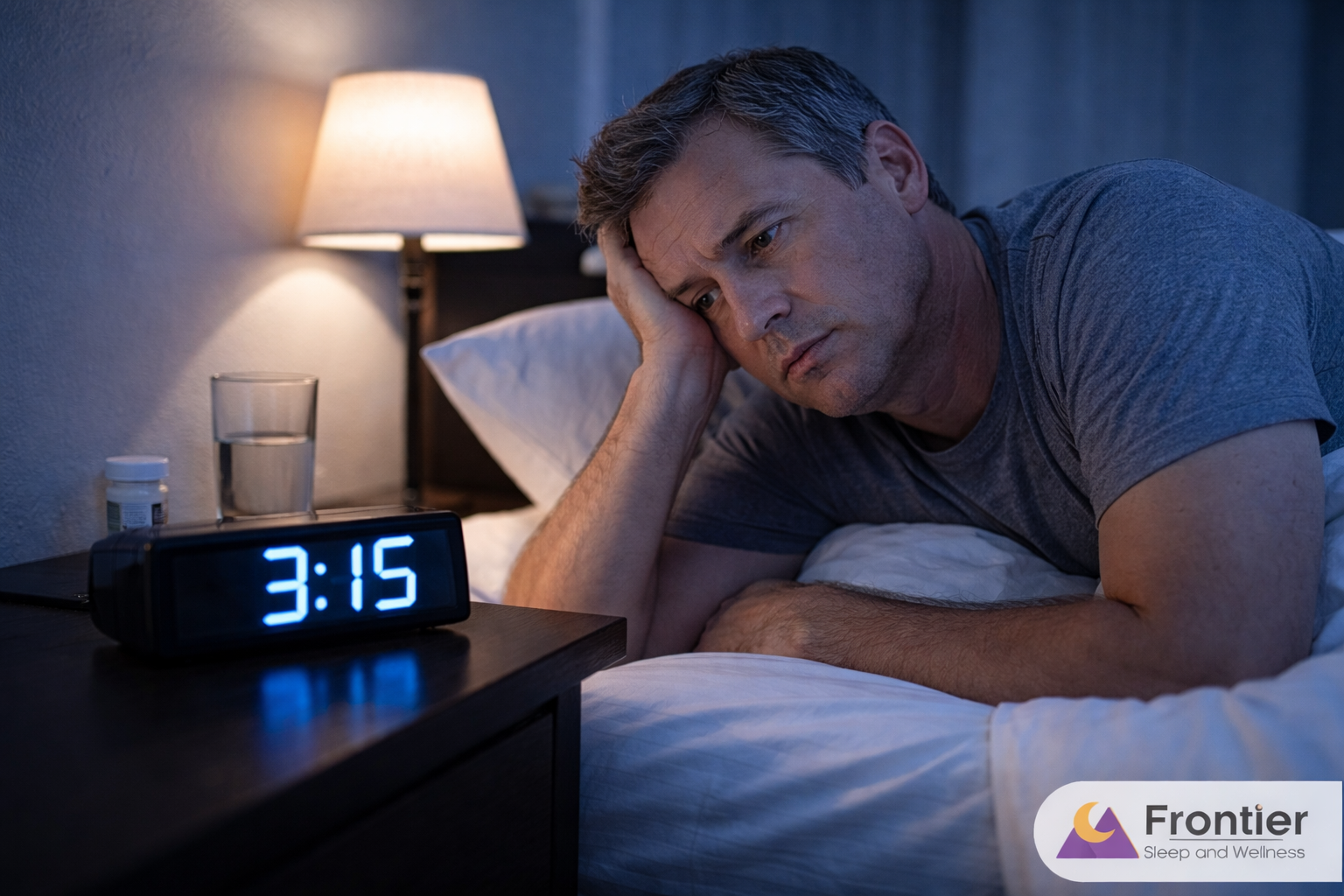
Waking up once during the night to use the bathroom might be inconvenient, but it's not typically a cause for medical concern. However, when does it cross the line from an occasional annoyance to a clinical issue? The medical community generally defines nocturia as the need to wake up two or more times every night to urinate.
Waking up this frequently is a strong signal that an underlying issue is at play. It’s not just about the number of trips, but the consistency. If you find yourself waking multiple times per night, week after week, it's a chronic problem that deserves attention. This level of sleep disruption can have a cumulative negative effect on your health, going far beyond just feeling tired. It’s a clear sign that you should speak with a healthcare professional to investigate potential causes, including sleep apnea.
One of the most encouraging aspects of the sleep apnea-nocturia link is that treating the sleep disorder often resolves the urinary issue. When sleep apnea is effectively managed, the cycle of breathing interruptions, oxygen drops, and heart strain is broken. As a result, the body stops overproducing the ANP hormone at night. Your kidneys return to their normal rhythm, producing less urine, and your bladder can finally rest.
Studies have shown that treating obstructive sleep apnea leads to a dramatic reduction in nighttime urination. Patients using CPAP (Continuous Positive Airway Pressure) therapy often report a significant decrease in the number of nightly bathroom trips, sometimes going from three or four awakenings to none at all. This highlights that treating sleep apnea isn't just about stopping snoring; it's about restoring normal physiological function and dramatically improving quality of life. For those who find CPAP difficult, effective alternatives like oral appliance therapy (OAT) can offer similar benefits, leading to consolidated, restorative sleep without constant interruptions. The primary goal is to stabilize your breathing, which in turn stabilizes your body's hormonal and urinary systems.

Making the decision to get tested for sleep apnea is a crucial step toward better health. If you're consistently waking up two or more times a night to urinate, especially when combined with other symptoms like snoring, daytime fatigue, or morning headaches, it's time to take action. Don't dismiss your nocturia as just a part of getting older or something you have to live with.
Consider a sleep apnea test if:
An evaluation is the only way to know for sure if your nighttime urination is caused by sleep apnea. Taking a home sleep test is a simple, effective, and convenient first step to getting the answers you need and exploring the costs of sleep tests.
At Frontier Sleep & Wellness, we understand that symptoms like nocturia are often overlooked signs of a serious underlying condition. We are dedicated to making a proper diagnosis accessible, affordable, and straightforward for our communities in San Antonio and South Austin. Our approach is centered on patient empowerment and clinical accuracy.
We provide legitimate, medical-grade home sleep testing that you can complete in the comfort of your own bed. We pride ourselves on affordability and insurance-friendly options, ensuring that cost is not a barrier to your health. A diagnosis from us doesn't lock you into a single treatment path. We believe in treatment freedom, empowering you with the knowledge to choose the best option, whether it's CPAP or an effective alternative like oral appliance therapy. If you have questions, our team is here to help, and you can find many answers on our FAQs page or by getting in touch through our contact us page. Don't let nighttime urination control your life any longer. Let us help you find the cause and the solution.
Q: Is nocturia always caused by sleep apnea?
A: No, but sleep apnea is a common and often overlooked cause of frequent nighttime urination. Other factors like aging, fluid intake, certain medications, prostate issues, diabetes, and heart failure can also contribute.
Q: How many times per night is considered nocturia?
A: Waking up two or more times per night to urinate is generally considered nocturia.
Q: Will treating sleep apnea stop nighttime urination?
A: In many cases, treating sleep apnea significantly reduces or eliminates nocturia, leading to improved sleep quality and fewer awakenings.
Q: Should I see a doctor for nocturia?
A: If frequent nighttime urination happens consistently or is combined with other symptoms like snoring, daytime fatigue, or gasping during sleep, it should be evaluated by a healthcare professional to rule out underlying conditions like sleep apnea.