.png)
Hypersomnia Self-Assessment Quiz: Understanding Excessive Daytime Sleepiness
Read More


It is a frustrating and confusing scenario: you struggle with loud snoring, persistent daytime fatigue, and a lingering brain fog that impacts your daily life. Convinced you have sleep apnea, you undergo a sleep test, only to be told the results are negative. Yet, the exhaustion remains. This experience is not uncommon, and it is crucial to understand that a single negative test isn't always the final word. Your symptoms are real, and they warrant a deeper investigation.
This situation can happen for various reasons, from the limitations of the test itself to the natural night-to-night variability of your sleep. The good news is that there is a clear path forward. This article will explain why your test might have missed the mark and provide actionable next steps to help you uncover the true cause of your symptoms, paving the way for an accurate diagnosis and effective treatment.
While modern sleep apnea tests are generally reliable, no test is perfect. A "false negative" result is possible, particularly with home sleep apnea tests (HSATs). These tests are designed for convenience and are highly effective at detecting moderate to severe obstructive sleep apnea (OSA). However, their scope is limited compared to in-lab studies. They primarily monitor breathing, oxygen levels, and respiratory effort, which means they can sometimes miss more subtle forms of sleep-disordered breathing. Understanding these limitations is the first step in advocating for your health. A home sleep test from a reputable provider is an excellent starting point, but it's essential to recognize it's part of a larger diagnostic process.
One of the most significant challenges in diagnosing sleep disorders is that our sleep is not the same every single night. This is known as night-to-night variability. Factors like stress, alcohol consumption, or sleeping position can drastically change the number of breathing events you experience. One study noted that in repeated tests, the Apnea-Hypopnea Index (AHI) changed by more than 10 events for 35% of patients.
Furthermore, the "first-night effect" can skew results; sleeping with new equipment in an unfamiliar setting (or even just with the awareness of being tested at home) can alter your natural sleep patterns, leading to a night that isn't representative of your typical sleep. This is why a single night of data may not capture the full picture of your condition.
Standard home sleep tests are excellent for identifying classic OSA, but they can be less sensitive to other variations of the condition. If your test was negative, you might still be dealing with one of these less obvious forms:
If you've received a negative result but still feel exhausted, it’s because the numbers on the test report don't always tell the whole story. Your symptoms are the most critical indicator that something is wrong with your sleep quality. An accurate sleep apnea diagnosis involves correlating test data with your real-world experience, and when they don't align, it's time to dig deeper.
The main metric used to diagnose sleep apnea is the Apnea-Hypopnea Index (AHI) or Respiratory Event Index (REI), which measures the number of times you stop breathing (apneas) or have shallow breathing (hypopneas) per hour. While a low AHI might suggest you don't have sleep apnea, this number doesn't account for other disturbances that fragment your sleep.
For example, Respiratory Effort-Related Arousals (RERAs) are subtle breathing disruptions that increase your effort to breathe and cause a brief awakening, but they don't meet the strict criteria for an apnea or hypopnea. These arousals can shatter your sleep architecture, preventing you from reaching deep, restorative sleep stages, leading to significant daytime fatigue even with a "normal" AHI.
Persistent fatigue and poor sleep aren't always caused by obstructive sleep apnea. Several other conditions can produce similar symptoms, and most are not detectable with a standard home sleep test.
Your body provides strong clues when your sleep is not restorative. A negative test result doesn't erase your daily experience. If you continue to suffer from the following symptoms, it is a clear signal that you need to pursue further evaluation. Don't dismiss what you're feeling; these symptoms are your primary reason to seek answers. Consider taking a sleep quiz to help organize your symptoms and concerns before your next appointment.
Receiving a negative result when you feel positive you have a problem can be disheartening, but it's not a dead end. It's an opportunity to take control of your diagnostic journey. Follow these clear, actionable steps to move toward clarity and find the right solution.
Start by making a detailed list of everything you're experiencing. Document your symptoms, their frequency, and their impact on your life. At the same time, take stock of your personal risk factors. Do you have a family history of sleep apnea? Are you overweight, or do you have a large neck circumference? Do you have other conditions like hypertension or type 2 diabetes? Presenting this complete picture to a sleep specialist is crucial for your re-evaluation.
Before jumping to conclusions, verify the quality of your initial test. Was it worn correctly according to the instructions? Did it record for a sufficient amount of time (typically at least four hours)? Sometimes, a sensor may fall off during the night, leading to incomplete or corrupted data. If the test itself was technically flawed, a repeat test is the immediate and logical next step.
Given the high degree of night-to-night variability in sleep apnea, a single test may simply have occurred on a "good night." If your symptoms are persistent and severe, requesting a second test is a perfectly reasonable and often necessary step. Don't hesitate to get a sleep test again to ensure you are capturing a more typical night's sleep.
The most effective way to counteract night-to-night variability is with multi-night testing. By collecting data over two or three nights, a sleep specialist can get a much more comprehensive and accurate average of your sleep patterns, significantly reducing the chance of a false negative. Studies have shown that single-night tests can miss mild to moderate OSA a high percentage of the time, making a strong case for a more extended monitoring period.
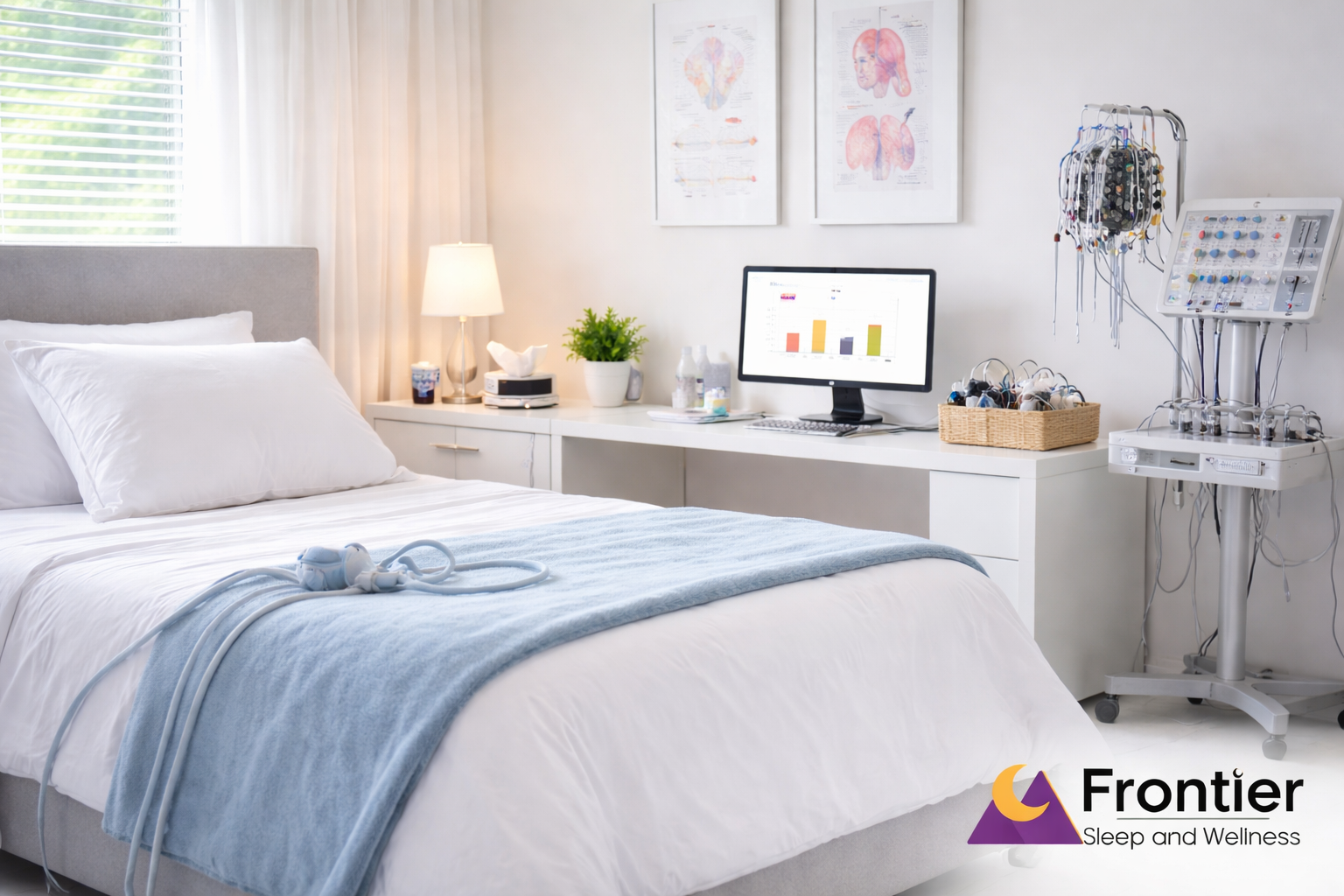
If home sleep tests continue to be negative despite strong symptoms, or if a more complex sleep disorder like UARS, narcolepsy, or PLMD is suspected, an in-lab polysomnography (PSG) is the definitive next step. A PSG is considered the gold standard for diagnosing sleep disorders because it monitors brain waves (EEG), eye movements, and muscle activity in addition to breathing and oxygen levels, providing a complete picture of your sleep.
At Frontier Sleep & Wellness, we understand the frustration of a negative test result that doesn't match your symptoms. Our entire approach is built on a foundation of diagnostic accuracy to prevent these situations and empower patients with clear answers. We believe that a precise diagnosis is the first and most critical step toward reclaiming your health.
Our commitment to accuracy is why we offer medical-grade, multi-night home sleep testing options. By analyzing data from more than one night, we can account for natural variability and gain a truer understanding of your sleep health. This methodology, as supported by research showing the benefits of multiple-night testing, dramatically reduces the risk of a false negative and provides the robust data needed for a confident diagnosis.
Furthermore, every test is reviewed by a board-certified physician to ensure the highest clinical standards are met. We don't lock you into a single treatment path. Once you have an accurate diagnosis, we believe in treatment freedom. Whether that involves exploring CPAP alternatives or determining if you are a candidate for oral appliance therapy, our goal is to provide you with a full range of treatment options. Your results are yours to take to the provider of your choice. Don't let a confusing test result stop you from finding a solution. Get an appointment with our team to discuss your symptoms and take the right next step toward a definitive diagnosis and a better night's sleep.
Q: Can a home sleep test miss sleep apnea?
A: Yes, home sleep tests can sometimes miss sleep apnea, particularly in mild, positional, or REM-related cases, due to their inherent limitations in monitoring all sleep stages and night-to-night variability.
Q: Why am I still tired after a negative sleep test?
A: Persistent tiredness after a negative sleep test can occur if the test didn't fully capture your typical sleep patterns, if the apnea is mild or positional, or if another sleep disorder like UARS, insomnia, or narcolepsy is present.
Q: Should I repeat my sleep test?
A: If symptoms such as severe fatigue or loud snoring persist despite a negative initial test, repeat testing, possibly a multi-night study or an in-lab polysomnography, is often recommended for a more accurate diagnosis.
Q: Is snoring always sleep apnea?
A: No, snoring is not always indicative of sleep apnea. However, persistent loud snoring, especially when accompanied by daytime fatigue or witnessed breathing pauses, should always be evaluated by a sleep specialist.
Q: What is multi-night sleep testing?
A: Multi-night sleep testing involves monitoring sleep patterns over several nights, typically at home, to account for night-to-night variability and provide a more comprehensive and accurate picture of a patient's breathing and sleep disruptions.