.png)
Hypersomnia Self-Assessment Quiz: Understanding Excessive Daytime Sleepiness
Read More


When you’re dealing with symptoms like chronic snoring, persistent daytime fatigue, morning headaches, or brain fog, getting to the root of the problem is the first step toward relief. The two primary tools for diagnosing sleep-disordered breathing are the home sleep test (HST) and the in-lab sleep study, formally known as polysomnography (PSG). While both aim to achieve an accurate sleep apnea diagnosis, they do so in fundamentally different ways.
A home sleep test is designed for convenience and focuses on key indicators of obstructive sleep apnea (OSA). You use a simple, portable device in the comfort of your own bed to monitor breathing patterns, airflow, respiratory effort, and blood oxygen levels. It’s an excellent and highly effective tool for many individuals with a high probability of straightforward OSA.
An in-lab sleep study, or polysomnography, is the gold standard for comprehensive sleep diagnostics. Conducted overnight in a specialized sleep center, a PSG records a much wider range of physiological data. In addition to breathing and oxygen, it monitors brain activity (EEG), eye movements (EOG), muscle activity (EMG), and heart rate (ECG). This detailed information allows sleep specialists to identify different sleep stages (NREM and REM), pinpoint arousals, and diagnose a broader spectrum of sleep disorders beyond just OSA.
For many people, a home sleep test is the ideal starting point. It's effective, less intimidating, and more affordable. You are likely a good candidate for an HST if:
The convenience of a Home Sleep Test makes it an accessible first step for a large portion of the population struggling with poor sleep. It provides the essential data needed to confirm or rule out uncomplicated OSA, allowing for a swift transition to discussing treatment options.
While HSTs are a powerful tool, they have limitations. Their primary function is to detect the breathing disruptions characteristic of obstructive sleep apnea. They do not record brain waves, so they cannot determine sleep stages, identify seizures, or definitively diagnose other complex sleep disorders.
Because of this focused approach, there are specific situations where the data from a home test would be insufficient to provide a complete and accurate picture of a patient's sleep health. In these cases, simply ruling out OSA doesn't solve the underlying problem, and more comprehensive testing is required to ensure nothing is missed. This is when an in-lab study becomes not just an option, but a clinical necessity.
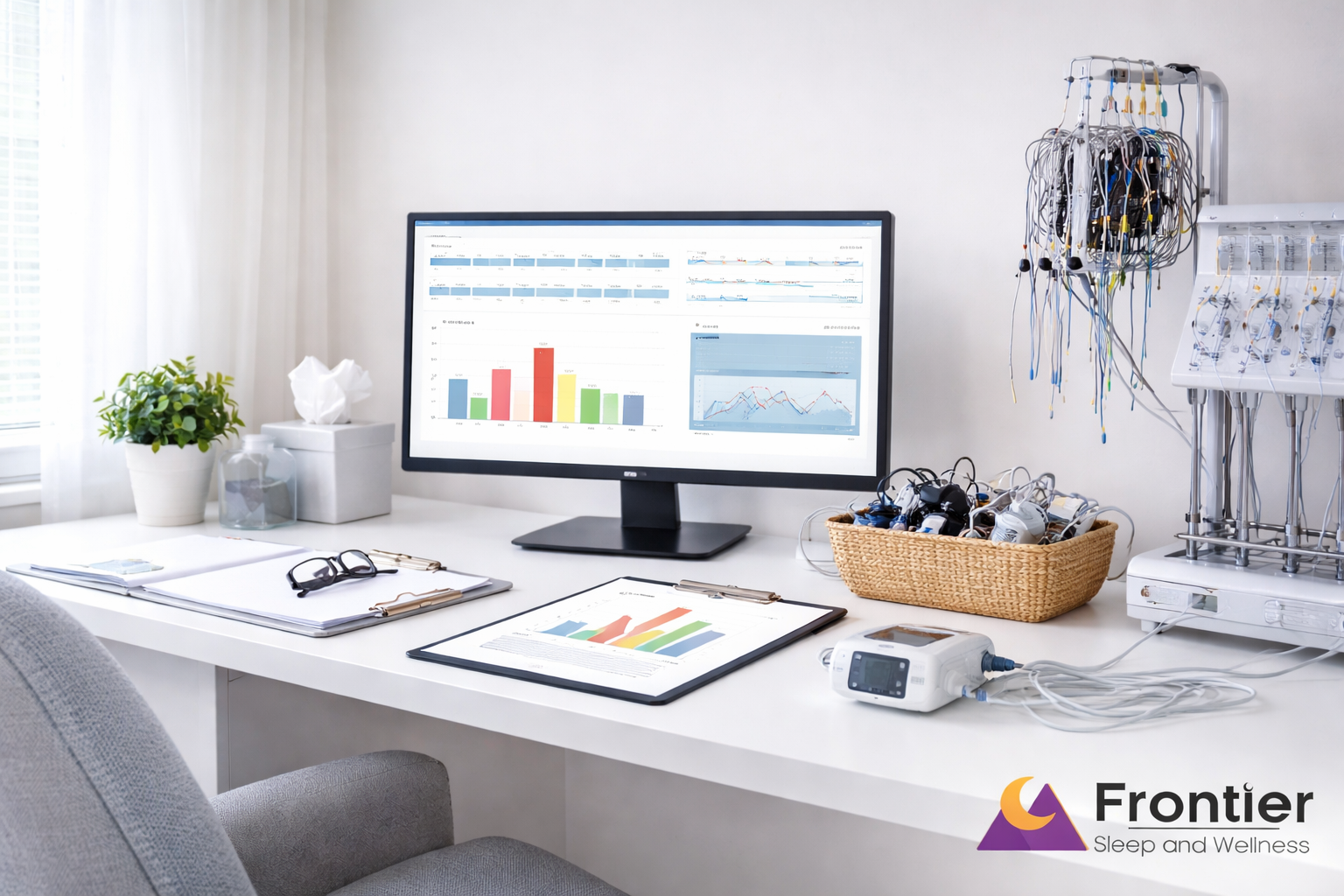
For certain individuals, jumping straight to an in-lab sleep study is the most direct and effective path to an accurate diagnosis. The detailed monitoring provided by a polysomnogram is essential when a patient's symptoms or medical history suggest a more complex issue. Frontier Sleep & Wellness helps patients determine if they fall into one of the following categories, where an in-lab study is the recommended approach.
If you have underlying health conditions such as congestive heart failure, chronic obstructive pulmonary disease (COPD) or other lung diseases, or certain neurological disorders, an in-lab study is often required. These conditions can cause sleep-related breathing issues that are not obstructive in nature or can be worsened by drops in oxygen levels. Continuous, attended monitoring in a lab ensures that any cardiorespiratory events are carefully documented.
Unlike OSA, which is caused by a physical blockage of the airway, central sleep apnea (CSA) occurs when the brain fails to send the proper signals to the muscles that control breathing. An HST cannot reliably differentiate between obstructive and central apneas because it doesn't monitor brain activity. An in-lab PSG is necessary to diagnose CSA, as well as other sleep disorders like narcolepsy, periodic limb movement disorder, or parasomnias.
If your main complaint is severe, chronic insomnia, or if you experience unusual behaviors like sleepwalking, sleep-talking, or acting out dreams (REM behavior disorder), an in-lab study is crucial. A PSG can identify underlying causes of fragmented sleep and capture the specific events associated with parasomnias, which would be impossible to document with a home test.
Sometimes, a person may have all the classic symptoms of sleep apnea, but their home sleep test comes back negative, or the data is inconclusive. This doesn't automatically mean a sleep disorder isn't present. In such cases, the American Academy of Sleep Medicine recommends an in-lab polysomnography as the definitive next step to ensure an accurate diagnosis is reached.
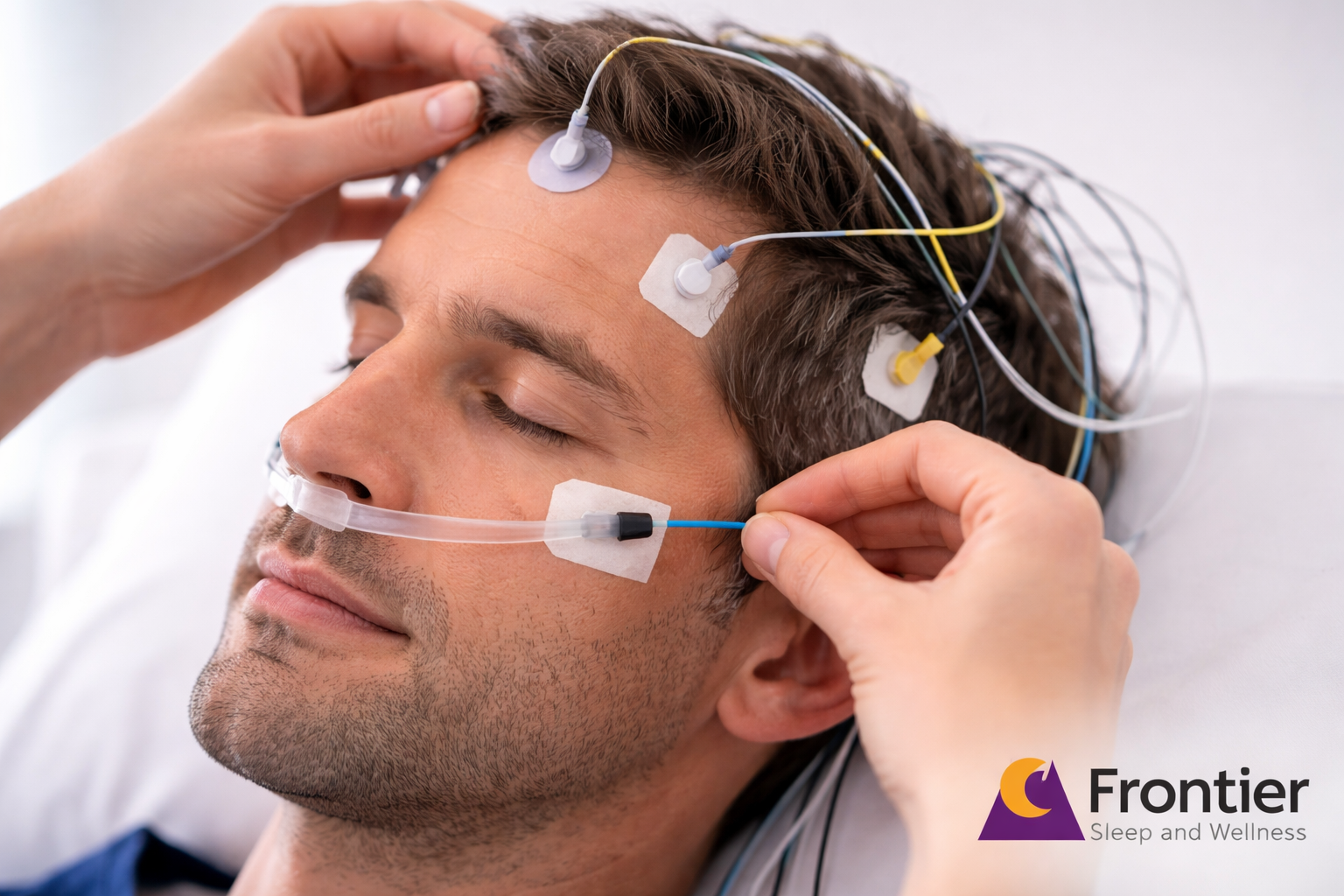
The idea of sleeping in a lab can be daunting, but the experience is designed to be as comfortable as possible while gathering critical information. During an in-lab PSG, a trained technologist applies several sensors to your body to monitor various functions. While it sounds like a lot, the wires are long enough to allow you to move and turn over in bed.
These sensors track:
This comprehensive data provides a complete, synchronized view of your sleep architecture, allowing a sleep medicine specialist to diagnose a wide range of conditions with high precision.
Despite the comprehensive nature of in-lab studies, it's important to reiterate that for the majority of patients with suspected moderate to severe OSA, a home sleep test is the best first step. The convenience of a home sleep test, combined with lower costs and high diagnostic accuracy for appropriate candidates, makes it an invaluable and accessible tool. It effectively removes barriers to diagnosis, allowing more people to get the answers they need without the complexity of an overnight stay in a facility.
By starting with an HST for appropriate patients, the healthcare system can operate more efficiently, reserving in-lab resources for the complex cases that truly require them. It's a patient-centered approach that prioritizes efficiency and comfort without sacrificing accuracy.
Navigating the world of sleep medicine can be confusing, but you don’t have to do it alone. At Frontier Sleep & Wellness, we are committed to diagnostic accuracy and patient empowerment. We don’t believe in a one-size-fits-all approach. Our process begins with a thorough evaluation of your symptoms, medical history, and individual needs to determine the most appropriate diagnostic path for you.
We provide a clear explanation of your options, including understanding the costs of sleep tests. Whether you get a sleep test at home or in a lab, our focus is on obtaining a precise diagnosis. Importantly, your results are portable, giving you complete treatment freedom. You are not locked into any single solution. Our goal is to provide you with the clarity you need to explore all available treatment options, including CPAP alternatives like oral appliance therapy.
If you're tired of feeling tired and ready to find answers, let us guide you toward the right test and a better night's sleep. Contact us today to learn more.
Is a home sleep test enough to diagnose sleep apnea?
For many patients, a home sleep test (HST) is highly effective and sufficient for diagnosing obstructive sleep apnea. However, in some cases, particularly those involving complex medical conditions or suspected central sleep apnea, may require the more comprehensive data set provided by an in-lab sleep study may be required for an accurate diagnosis.
What conditions require an in-lab sleep study?
An in-lab sleep study (polysomnography) is often recommended for patients with complex medical conditions like heart disease or lung disease, suspected central sleep apnea, neurological disorders, severe insomnia, or unusual sleep behaviors such as parasomnias. It's also advised if a home sleep test yields inconclusive results despite persistent symptoms.
Is an in-lab sleep study more accurate?
An in-lab sleep study provides more comprehensive data by monitoring a wider range of physiological parameters, including brain activity and sleep stages, which home tests typically do not. While this makes it more suitable for diagnosing complex sleep disorders, it's not inherently "more accurate" for every patient; home sleep tests are highly accurate for appropriate candidates with suspected obstructive sleep apnea.
Can I start with a home sleep test first?
In most cases, yes, starting with a home sleep test (HST) is a convenient and cost-effective first step, especially when obstructive sleep apnea is strongly suspected. A healthcare provider will evaluate your symptoms and medical history to determine if an HST is appropriate for your specific situation.