.png)
Hypersomnia Self-Assessment Quiz: Understanding Excessive Daytime Sleepiness
Read More


Many people dismiss loud, chronic snoring as a mere annoyance. However, it can often be a key indicator of a more serious underlying condition: obstructive sleep apnea (OSA). Sleep apnea is a sleep disorder characterized by repeated interruptions in breathing throughout the night. These pauses, which can last for ten seconds or longer, occur when throat muscles relax and block the airway.
While snoring is a common symptom, others include waking up gasping or choking, persistent daytime fatigue, morning headaches, and difficulty concentrating. These symptoms arise because the body is constantly being jolted out of deep, restorative sleep to resume breathing. Over time, this cycle can have a significant impact on your health. Untreated sleep apnea is linked to serious health risks, including high blood pressure, heart disease, stroke, and type 2 diabetes. This underscores why taking a sleep quiz to assess your risk and seeking an accurate diagnosis isn't just helpful—it's essential for your long-term well-being.
In an effort to find a quick fix for snoring or fatigue, some people might be tempted to purchase an over-the-counter anti-snoring device or even a CPAP machine without getting a formal diagnosis. This approach is not only ineffective but can also be dangerous. Embarking on the sleep apnea treatment process without objective data is a gamble with your health and resources.
Guessing at a solution without understanding the root cause or severity of the problem is a recipe for failure. An accurate diagnosis is the bedrock of effective treatment, ensuring that the chosen therapy is tailored to your specific physiological needs.
Without a medical-grade sleep test, you have no way of knowing if you truly have sleep apnea, let alone its severity. You might be using a treatment that is too aggressive for a mild case or, more commonly, one that is completely inadequate for a severe condition. This can lead to months or even years of frustration with no relief from your symptoms. Medical-grade testing provides the concrete data needed to select the right therapy from the start. This ensures that whether you need CPAP therapy, an oral appliance, or another intervention, the choice is based on evidence, not guesswork.
Sleep-disordered breathing can be complex. What appears to be straightforward obstructive sleep apnea might coexist with other sleep disorders or health issues. A comprehensive diagnostic evaluation, overseen by a physician, is crucial for identifying these interconnected problems. For instance, an in-lab study might be required to rule out central sleep apnea or other complex conditions. Skipping the diagnostic step means these nuances will be missed, potentially allowing more serious health risks to go unaddressed. Physician oversight throughout the diagnostic journey ensures a holistic view of your health.

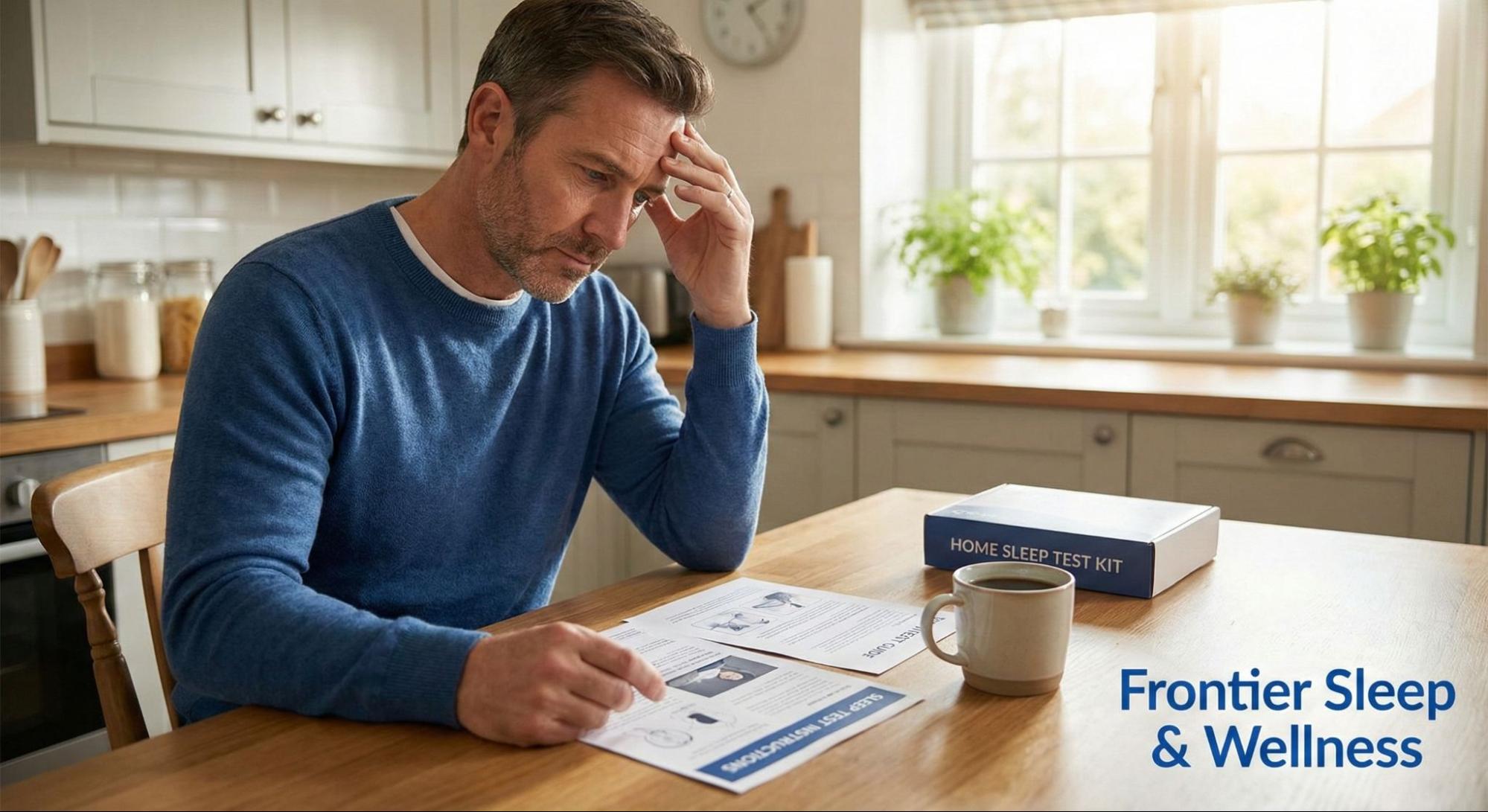
For many individuals in Austin, San Antonio, and beyond, a home sleep test (HST) is the most convenient and effective first step in diagnosing obstructive sleep apnea. An HST is a medical-grade device prescribed by a physician that you use in the comfort and privacy of your own bed. It’s designed to be simple to use, typically involving a few sensors that you wear overnight.
These sensors collect crucial data while you sleep, including:
After one night, the device has the data needed for a sleep specialist to accurately diagnose OSA and determine its severity. If you're wondering about the costs of sleep tests, HSTs are a significantly more affordable and accessible option for many patients.
While a home sleep test is highly accurate for diagnosing most cases of obstructive sleep apnea, it's important to understand when it's the right choice. HSTs are ideal for patients who have a high probability of moderate to severe OSA and do not have other significant comorbidities.
However, in some situations, a traditional in-lab sleep study, known as polysomnography, may be recommended. An in-lab study is more comprehensive, monitoring brain waves, muscle activity, and leg movements in addition to breathing. A physician might recommend an in-lab study if:
Understanding the full spectrum of diagnostic tools ensures that every patient receives the most appropriate evaluation for their unique situation. For many, the journey to better sleep begins with a simple, convenient home sleep test.
The primary metric obtained from your sleep test is the Apnea-Hypopnea Index, or AHI score. The AHI represents the average number of apnea and hypopnea events you experience per hour of sleep. This number is crucial because it determines the severity of your sleep apnea:
This objective data moves you from suspicion to certainty. It provides the clinical foundation needed to explore the right treatment options for you.
Your AHI score, along with other data from the test and a review of your symptoms, allows a physician to recommend a truly personalized treatment plan. A diagnosis empowers you with treatment freedom. You are not automatically locked into a single solution. For instance, patients with mild to moderate sleep apnea are often excellent candidates for oral appliance therapy (OAT), a comfortable and effective CPAP alternative. For others with more severe cases, CPAP may be the most effective first line of defense. The key is that the recommendation is based on your specific diagnostic results.
Receiving your results is just the beginning. The most critical step is to get an appointment with one of our experts. A qualified physician will review the data with you, explain what it means for your health, and discuss the pros and cons of each treatment path, from OAT and CPAP to surgical options. This collaborative approach ensures you can make an informed decision. Continuous follow-up, whether through CPAP support or oral appliance adjustments, is essential to confirm your chosen therapy is working effectively and improving your quality of life. For more answers to common questions, please see our FAQs page.
Waking up tired doesn't have to be your norm. If you are in Austin, San Antonio, Kyle, New Braunfels, or the surrounding Texas communities, the first step to better sleep is a clear diagnosis. Don't waste another day feeling fatigued or another dollar on ineffective treatments. An accurate, medical-grade home sleep test is the essential starting point for a personalized and effective solution.
At Frontier Sleep & Wellness, we are committed to providing accessible diagnostics and empowering you with treatment freedom. We invite you to contact us today to learn more about how we can help you achieve the restorative sleep you deserve.
Why can't I just try a sleep apnea treatment without a test?
Starting sleep apnea treatment without a proper diagnosis from a home sleep test or in-lab study can lead to ineffective therapy, wasted time and money, and potential health complications if your condition is misdiagnosed or its severity is misunderstood. Objective testing ensures a personalized and effective treatment plan.
What exactly does a home sleep test measure?
A medical-grade home sleep test typically measures key indicators during your sleep, including your breathing patterns, heart rate, and blood oxygen levels. This data helps medical professionals accurately diagnose obstructive sleep apnea and determine its severity.
Is a home sleep test as accurate as an in-lab sleep study?
For diagnosing moderate to severe obstructive sleep apnea, a home sleep test is often accurate and convenient. However, in-lab sleep studies (polysomnography) provide more comprehensive data, including brain activity, and may be recommended for complex cases, if initial home test results are inconclusive, or to rule out other sleep disorders.
How do my home sleep test results influence my treatment options?
Your home sleep test results, particularly your Apnea-Hypopnea Index (AHI) score, determine the severity of your sleep apnea. This information is crucial for your physician to recommend the most appropriate and effective treatment, whether it's CPAP therapy, an oral appliance, or lifestyle modifications.
What are the next steps after receiving a positive sleep apnea diagnosis?
After a positive diagnosis, a sleep specialist will review your results with you to explain your condition and discuss personalized treatment options. These may include continuous positive airway pressure (CPAP), oral appliance therapy, or other interventions, ensuring you have the freedom to choose the best path for your health.