.png)
Hypersomnia Self-Assessment Quiz: Understanding Excessive Daytime Sleepiness
Read More


Feeling constantly tired is more than just a minor inconvenience; for many in Austin and across Texas, it's a daily battle against an invisible drain on their energy, focus, and overall well-being. This pervasive fatigue, often accompanied by loud snoring, morning headaches, or brain fog, could be a sign of obstructive sleep apnea (OSA), a common yet seriously underdiagnosed sleep disorder. Left unaddressed, sleep apnea can contribute to significant health issues, including high blood pressure, heart disease, and diabetes. The critical first step toward reclaiming your health is getting an accurate diagnosis, but the thought of a complicated, inconvenient testing process can be a major hurdle.
Fortunately, modern medicine has paved a simpler, more accessible path. Frontier Sleep & Wellness is dedicated to providing the easiest way to get diagnosed for sleep apnea in Austin, TX, empowering you to get the answers you need without disrupting your life. Our streamlined process prioritizes your comfort and convenience, ensuring that a diagnosis is not a barrier but a doorway to better health. If you're wondering where to begin, the first step is often the easiest: take our simple Sleep Quiz to quickly assess your symptoms and start your journey.
The first step in any health journey is awareness. The signs of sleep apnea can be subtle, often dismissed as normal signs of aging or stress. However, recognizing these patterns is crucial for seeking a timely evaluation. If you or a loved one experiences several of the following symptoms, it’s a strong indicator that you should consider getting tested for sleep apnea.
Common symptoms include:
Acknowledging these symptoms is not a cause for alarm, but a call to action. It’s the essential first move toward understanding your health and finding a solution. An easy way to see if these symptoms align with a potential risk for sleep apnea is by completing our confidential sleep apnea screening quiz.
For years, the only way to get a definitive sleep apnea diagnosis was through an in-lab sleep study, known as polysomnography (PSG). This method, while comprehensive, has significant drawbacks that can deter people from seeking help. The good news is that for most cases of suspected obstructive sleep apnea, there is now a much simpler, more comfortable, and highly accurate alternative: the home sleep test (HST).
A traditional in-lab sleep study requires an overnight stay in a specialized sleep center or hospital. The environment is clinical and unfamiliar, and a technician attaches numerous sensors to your scalp, face, chest, and legs to monitor brain waves, heart rate, breathing, oxygen levels, and muscle activity. While this "gold standard" test provides a vast amount of data, the experience itself can be disruptive. Many people find it difficult to sleep normally in a strange bed while being monitored, which can sometimes affect the accuracy of the results.
Home sleep tests represent a game-changing shift in sleep medicine, bringing diagnostic power directly to your bedroom. This modern approach offers several key advantages that make it the easiest way to get diagnosed for sleep apnea:
By removing the primary barriers of cost, inconvenience, and discomfort, home sleep testing empowers more people in Austin, San Antonio, Kyle, and New Braunfels to take control of their sleep health.
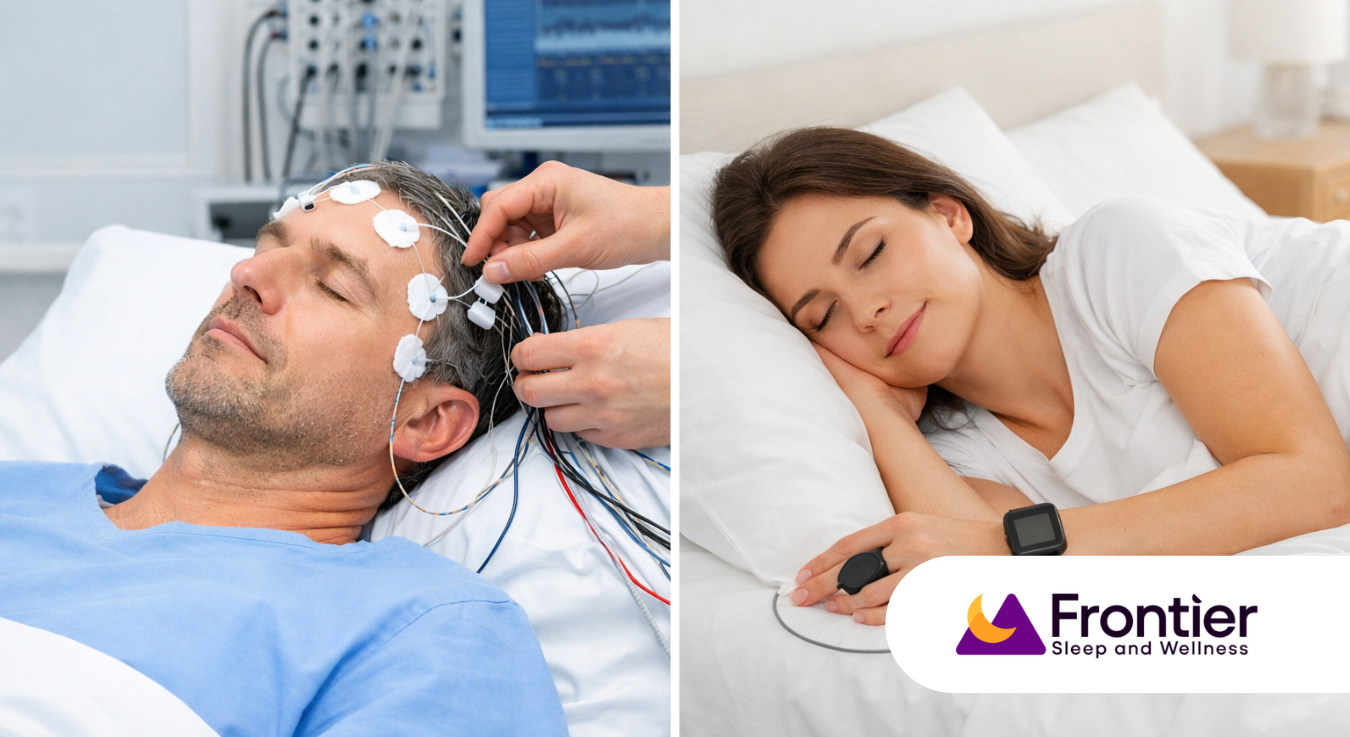
We believe that getting a sleep apnea diagnosis should be straightforward and stress-free. Our entire process is designed around your convenience, ensuring a fast and efficient journey from suspicion to solution.
Step 1: Start with a Simple Screening. The journey begins with our easy online Sleep Quiz. This confidential tool helps you quickly assess your symptoms and risk factors. Based on your results, you can schedule a consultation to discuss the next steps.
Step 2: Physician Oversight and Prescription. A medical-grade home sleep test requires a prescription. Our process ensures you receive proper medical oversight from a qualified physician who will review your information and, if appropriate, prescribe the HST. This critical step ensures your test is clinically valid and legitimate.
Step 3: Receive Your Home Sleep Test Kit. Once prescribed, we send the HST kit directly to your home in the Austin area or beyond. The kit is compact and comes with clear, easy-to-follow instructions. There’s no need to visit a lab or clinic.
Step 4: Test in the Comfort of Your Own Bed. You’ll wear the simple, non-invasive device for one night while you sleep. The sensors are minimal, typically consisting of a chest belt, a nasal cannula, and a finger probe. You can sleep in your normal position without the discomfort of a lab environment.
Step 5: Return the Device and Get Your Results. After your test, you simply return the device using the provided packaging. The data is then uploaded and analyzed by an independent, board-certified sleep specialist.
Step 6: Review and Next Steps. We will contact you to review your results and provide a clear diagnosis. From there, you have the freedom to decide your next steps. If you have questions, our FAQs page is a great resource.
After you complete the home sleep test, the data is analyzed by a sleep physician to determine if you have obstructive sleep apnea and, if so, its severity. The key metric used in your diagnosis is the Apnea-Hypopnea Index (AHI). The AHI measures the average number of times your breathing pauses (apneas) or becomes very shallow (hypopneas) per hour of sleep.
The severity of sleep apnea is typically categorized based on your AHI score:
Understanding your AHI is crucial because it directly correlates with the level of sleep disruption and oxygen deprivation you experience, which in turn influences the potential long-term health risks. Once you have a diagnosis, the next step is to explore what treatment options are right for you. At Frontier Sleep & Wellness, this is where our commitment to patient freedom truly begins. We provide you with your full diagnostic report, empowering you to make an informed decision about your care.

A diagnosis of sleep apnea is not the end of the road; it’s the beginning of a healthier life. At Frontier Sleep & Wellness, we firmly believe that every patient deserves the freedom to choose the treatment path that best fits their lifestyle and preferences. Your diagnosis is portable, meaning you are not locked into any single provider or treatment solution.
We ensure you understand all available evidence-based treatment options. While CPAP (Continuous Positive Airway Pressure) therapy is a well-known and effective treatment, it is not the only solution. For many patients, especially those with mild to moderate OSA, there are highly effective CPAP alternatives.
One of the leading alternatives is Oral Appliance Therapy (OAT). This involves a custom-fitted dental device, similar to a mouthguard, that you wear at night. The device works by gently shifting your lower jaw forward, which helps keep your airway open and prevents the obstructions that cause apnea. Oral Appliance Therapy is often preferred by patients for its comfort, silence, and portability. It is a clinically proven, FDA-cleared medical treatment that can transform your sleep quality. The best treatment is one you will use consistently, and our mission is to provide the support and information you need to make that choice confidently when you get an appointment with our team. A proper diagnosis is the first and most critical step, and the American Academy of Sleep Medicine provides clinical practice guidelines to ensure quality care.
What are the common signs that indicate I might need a sleep apnea diagnosis?
Common signs include loud, persistent snoring, feeling excessively tired during the day even after a full night's sleep, observed pauses in breathing during sleep, waking up gasping or choking, morning headaches, and difficulty concentrating.
How does a home sleep test compare to an in-lab sleep study for diagnosis?
A home sleep test (HST) offers a convenient, comfortable, and cost-effective way to diagnose obstructive sleep apnea in your natural sleep environment. While an in-lab study (polysomnography) provides more comprehensive data for complex conditions, HSTs are highly effective for most suspected OSA cases and are professionally reviewed by sleep specialists.
How quickly can I get a sleep apnea diagnosis with Frontier Sleep & Wellness in Austin?
Frontier Sleep & Wellness streamlines the diagnostic process. After an initial screening and physician approval, you can typically complete your home sleep test quickly, with results analyzed by a sleep specialist to provide a diagnosis in a timely manner, avoiding unnecessary delays.
Is a prescription required for a home sleep apnea test?
Yes, a physician's prescription is required for a medical-grade home sleep test to ensure appropriate medical oversight and accurate diagnosis. Frontier Sleep & Wellness facilitates this process through initial evaluations.
What are my treatment options after being diagnosed with sleep apnea through a home sleep test?
After diagnosis, Frontier Sleep & Wellness offers a range of evidence-based treatment options, including effective CPAP alternatives like Oral Appliance Therapy (OAT), alongside traditional CPAP therapy. Your personalized treatment plan will be discussed with a sleep specialist to best suit your needs and preferences.